Clem's Corned Beef
Here I report on my first effort at homemade corned beef.
There is no corn in the recipe. The word "corn" comes from the old English meaning grain-sized (or pellets). Thus, many things can be corn including maize (which eventually came to be known as just "corn"). Cornstarch is also a misleading term as again, there is no corn. Cornstarch is so named because grains such as wheat were also called corn in old English. Cornstarch is just the starch fraction of wheat flour. In the case of corned beef, it is so called because large grains (corns) of salt were used to brine the beef.
GENERAL PRECAUTION
You are
making a food product.
Exercise maximum hygiene/sanitation in all your procedures and
equipment used.
Method
Firstly, obtain beef brisket of an amount suitable for your needs.
Prepare the brining solution (to make 1 litre)
-
175 g table salt
-
150 g brown sugar
-
3.2 g No. 1 Pink Curing Salt (Prague Powder)(per J. Weissman)
This is pink in color so that it is not mistaken for table salt (it is NOT Himalayan PINK salt).
It comprises 6.25% Sodium Nitrite and 93.75% table salt (NaCl).
The US FDA recommendation for dosage of No.1 Pink Curing Salt is no more than 3.2 g for each kilogram of meat to be cured (see below for risk).
The nitrite is antimicrobial and helps preserve processed foods. Red meat is red because oxygen binds with the pigment myoglobin in meats. This binding is temporary and when the oxygen is lost, meat turns grey. Nitrite is an alternate to oxygen as a myoglobin binder but the bonds made are more stable. This is why nitrited meats remain that ruddy color - such as in corned beef when nitrite is added.
Be aware that nitrites when consumed has been shown to cause cancer - in mice. However, curing salt is used routinely in commercially processed meats such as bacon, hams and corned beef. As with everything else, eat these in moderation.
Do note that the compounds of concern - nitrosoamines, form from nitrites in meat at cooking temperatures above 130oC. Since corned beef and pastrami processing usually involve temperatures below 130oC, it can be said that consumption of these meat products is less of a worry if any.
-
Spices (your choice of blend and now much):
Roughly grind 2 tablespoons black peppercorns, 1 tablespoon of mustard seeds yellow or black), and 1 tablespoon coriander seeds.
Reserve a tablespoon of this blend for use in cooking later. -
Add the sugar, salt and ground spices into 1 litre of water.
-
Add 6 crushed bay leaves, and 1 teaspoon of allspice powder.
-
Boil the mix and then leave it to cool to room temperature.
Brining
-
Trim the beef brisket to remove silverskin and excess fat.
-
Place the beef into a suitably-sized container.
-
Add enough cooled brining solution to completely immerse the beef.
-
Place in a refrigerator and allow the beef to cure for at least 10 days.
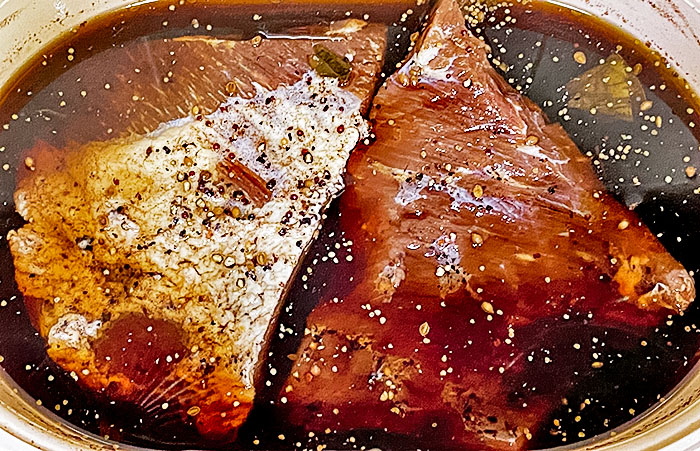
The brisket flats
after 10 days in brining solution
Here's how I dry brined and then cold smoked some salmon fillets in
time for use as a Christmas eve dinner appetizer (started
brining on 23rd Dec and served it as a first course the evening
after):
Ingredients
-
Salmon fillets
-
Salt
Large crystalline salt is better for this use as it will result in less salt penetration into the fillet(s).
-
Brown sugar
-
Herbs as desired (I added dill at some stage of the curing)
Method
-
Make a 50:50 mix of salt and brown sugar for a dry brining
cure.
Use your judgement as to the quantity of dry cure needed.
-
Place about half the mix onto a suitable tray to be used for
the curing.
- Deposit the fillet(s) onto the bed of salt/sugar and then use the rest of the cure to coat the tops of the fillets.
Cooking
-
At the end of the brining period, remove the beef and wash it to remove brine.
You may choose at this time to immerse the beef in fresh water to remove some of the salt which has entered the meat.
The amount of washing/soaking will depend on how salty you prefer your corned beef.
Remember that the cooking process will remove more salt later. -
Immerse the washed beef with fresh water in a saucepan.
-
Add a mirepoix at this stage if you like and the reserved ground spice blend.
A mirepoix is a trinity of sliced or diced aromatic vegetables viz. carrot, onion and celery. -
Bring the beef to a gentle boil and cover the saucepan.
-
Adjust the stove heat to allow a light simmer.
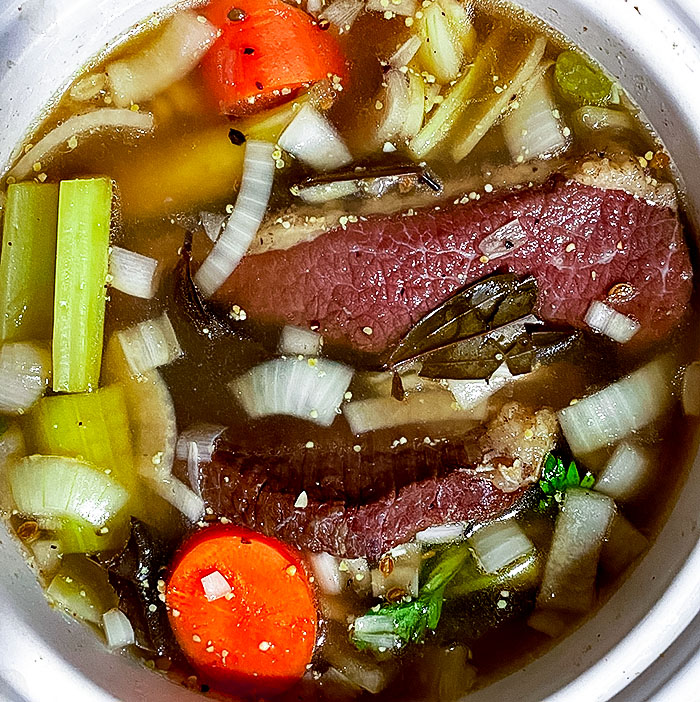
The corned beef
briskets being slow cooked with mirepoix and brining spices
-
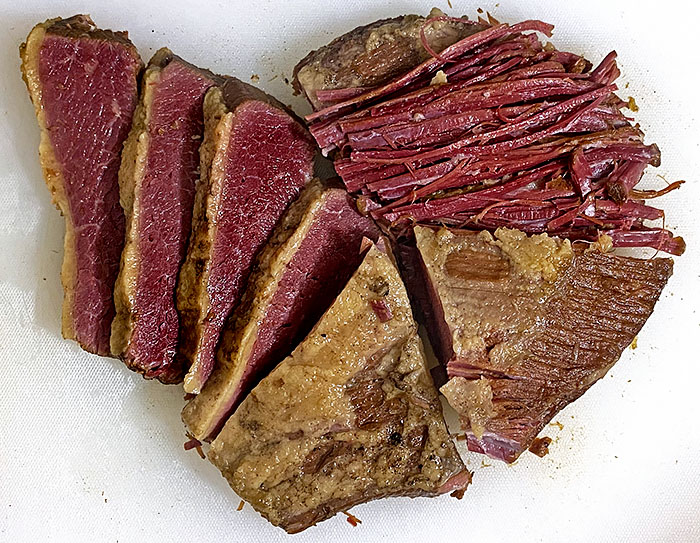
Cook for several hours until the corned beef is tender (breaks apart easily with a knife and fork).
-
You are done. Enjoy your effort in a corned beef meal!
Please remember that this is NOT a cooked product and so handle, store and consume it with appropriate care.
All my cooking (some without recipes) can be found here (click on each photo to go to that dish's page):
http://clemkuek.com/photoalbum/photo696.html
Video presentations can be found here:
03 March
2022
Created by Clem Kuek
