Clem's Singapore Hainan Chicken Rice Paste
The iconic Singapore Hainan Chicken Rice does not come from Hainan Island. The reference to Hainan is thought to be most likely due to the dish arising from the Hainanese diaspora in Nanyang (Singapore/Malaysia) who made a culinary copy of Hainan's own iconic Wenchang Chicken.
I have had the
opportunity to try
Wenchang Chicken on Hainan Island itself (http://clemkuek.com/photoalbum/photo794.html) and although it
looks very similar to the Nanyang Chicken Rice, it is nothing
like it (Wenchang chicken is much tougher and it and the
rice is less aromatic). I think that it is quite appropriate to
call the Nanyang dish Singapore Chicken Rice (without the reference
to its origin) because the red dot version is very different and
iconic in its own right.
Apart from the gentle poaching of the chicken in Singapore
Chicken Rice, the key to a satisfactory taste overall is the
cooking of the rice with an aromatic paste (the dish is not
eaten with plain rice). These days, there are many brands of
chicken rice paste to chose from in Asian grocery stores. But
you can easily make your own and one which has the exact taste
of your preference.
Here is how I
prepared a batch for whenever I want to cook Singapore Chicken
Rice.
INGREDIENTS (for one serve)
- 125 g
ginger
- 80 g
garlic
- 60 small
onions (Shallots; Bombay; or Red Onions)
- 30 - 40 g
chicken fat
It is definitely worth using chicken fat as it adds extra flavour to the dish.
Each time you cook chicken, store away fat trimmings until you have enough to render the fat in one go for later use.
- 1/4 cup
neutral oil
- 3 - 4
Pandan leaves
- Condiments e.g. fish sauce; MSG; chickens stock powder
METHOD
- Blend the
ginger, garlic, onion with some if not all of the oil and
fat (use all of it or reserve some from frying later.
- Gently fry
the blend using all the oil until the blend changes into a
darker colour (your choice of how dark). During the frying,
add in the pandan leaves. Cut the latter into
manageable lengths but remember that you are going to remove
them after the frying.
The frying turns the ingredient from raw-tasting to being aromatic in nature and so is an essential step.
- Add your
chosen condiments for final taste.
- When done
frying, remove the pandan leaves and let the paste
cool down before spooning in a clean glass jar. Store the
paste in the refrigerator - it will keep for weeks since it
is cooked. For longer storage, you may want to freeze
aliquots of the paste in plastic containers.
- When
cooking chicken rice, for each cup of rice, add a few heaped
teaspoonfuls of this paste when the rice is being cooked.
- Now you
have your very own Singapore Hainan Chicken Rice paste just
as good as store bought (this is quite expensive these
days)!
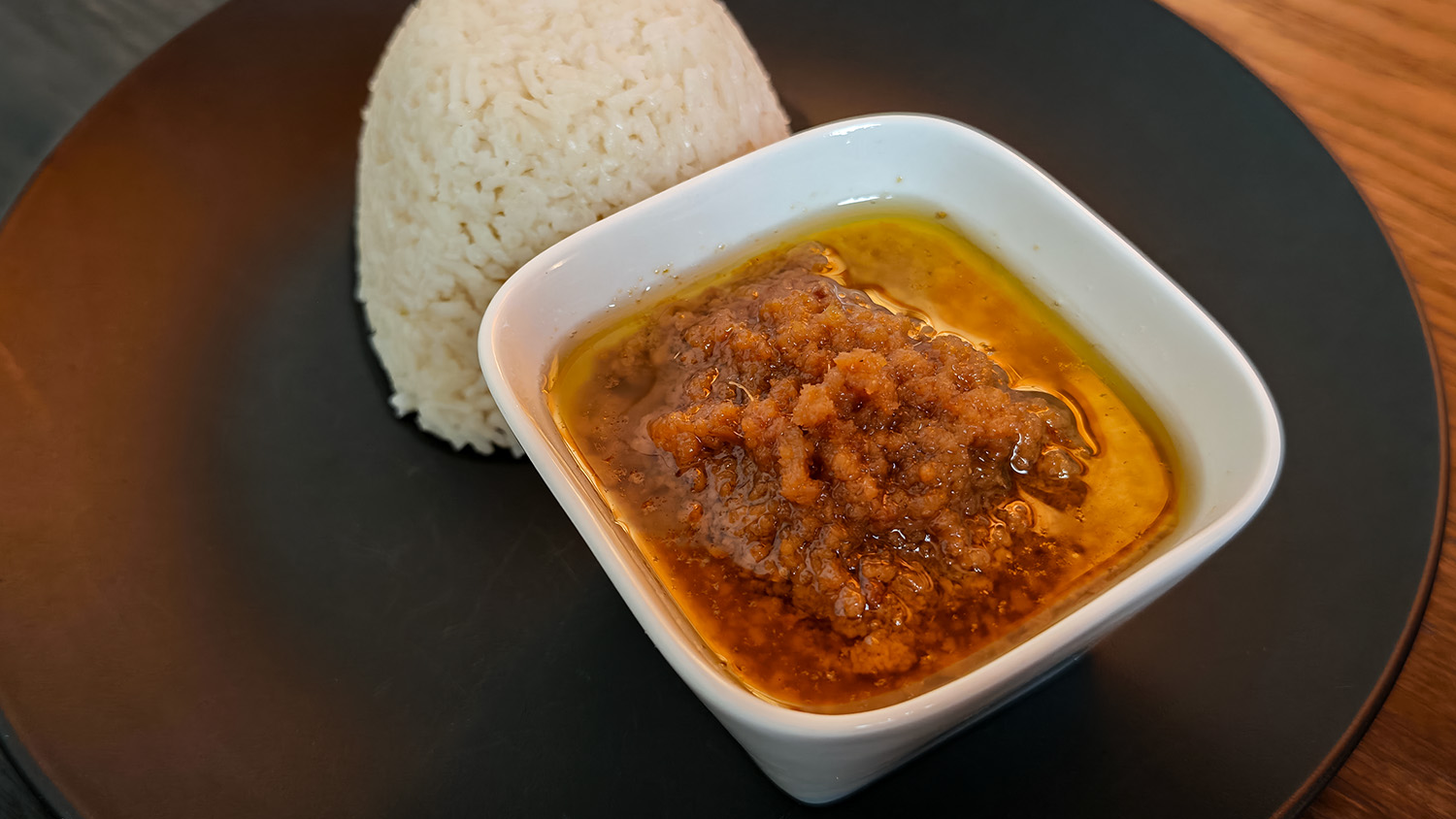
Clem's Singapore Hainan Chicken Rice Paste
ENJOY!!
09 September
2026
Cooking by Clem:
https://clemkuek.com/photoalbum/photo696.html
Video presentations can be found here:
Earlier Days: https://youtu.be/BWyHY1h9Y5s
Recent Past: https://youtu.be/PL9wWSI_Dfw
More Recently: https://youtu.be/nk6O2tGJ5pk
Created by Clem Kuek
