Clem's Easy Brown Sugar Kaya
Kaya is a South-East Asian jam. This is the Indo-Malay name of the concoction as used in Malaysia, Indonesia and Singapore.
Kaya is made from eggs, coconut cream (or milk) and sugar which are gently, slowly cooked and stirred in a bain-marie (double boiler) over some hours. Gentle heating unfolds the egg proteins and these unfolded molecules cross-link to form a thicken gel without "cooking" the eggs as such. They also bind with the fats in the coconut cream to form a stable emulsion (suspension of oils in an aqueous solution). The sugars caramelize when heated over steady heat over a length of time to form complex flavour compounds. Kaya is typically also flavoured via pandan leaves (Pandanus Screwpine). All this results in a tasty, sweet velvety smooth organoleptic experience which is kaya.
Despite its rather complex biochemistry, kaya is easy to make. It only needs close attention, time and arm action. I have described the method previously:
https://clemkuek.com/photoalbum/photo696_2g.html
In the batch which I made yesterday, I made a variation to the method above where I only used dark brown sugar (for more flavour), and coconut cream (without adding any coconut cream powder). My guess at the time of making the variation is that the kaya will take longer to cook (resulting from more water in the coconut cream than if less was used and a cream powder was added as replacement), and that this kaya will be darker in colour.
Here's how it was
done:
INGREDIENTS
- 3 packed
cups of dark brown sugar.
Volumetrically, a cup is 240 mL in this case.
The weight of the contents of each cup will depend on the specific gravity of the ingredient.
You can opt to use less sugar but with caution as lowering sugar content reduces the jam's shelf-life keeping quality.
NOTE:
If you do not wish to have dark coloured kaya, just use white sugar.
- 6 large
eggs.
- 400 mL of
coconut cream.
- Some
pandan leaves (either fresh or frozen).
The more leaves you use, the more pandan falvour your kaya will end up having.
METHOD
-
Mix the sugar, eggs, and
cream well in a container which can fit into another one
with boiling water in it (forming a double boiler like a
bain-marie).
You may find that the cream is easier to work with if it is warmed up before mixing.
-
When mixed, place the
container in the larger one with gentle boiling water.
-
Add the pandan leaves.
-
Continuously stir your
concoction as it heats up.
-
Let the developing jam cook
in the double boiler for some 2 - 3 hours.
You will notice that the jam gets thicker with time and also darker in colour.
The thickness develops due to gel formation and also because water is lost from the concoction during it s heating.
KEEP STIRRING or risk the jam catching and scorching.
You may remove the pandan leaves at some stage of the cooking process.
-
When the jam appears to no
longer get thicker, you have made your kaya.
-
This kaya will appear
much darker than most because of the dark brown sugar used.
-
Store while still hot is a
clean glass jar.
As this preparation has no preservatives added, it relies on the fact that it has been heat treated, and its high sugar content (leading to low Water Activity).
Determine shelf-life of this product accordingly.
Given what it is and its making, this kaya should be fine for weeks when stored in a refrigerator.
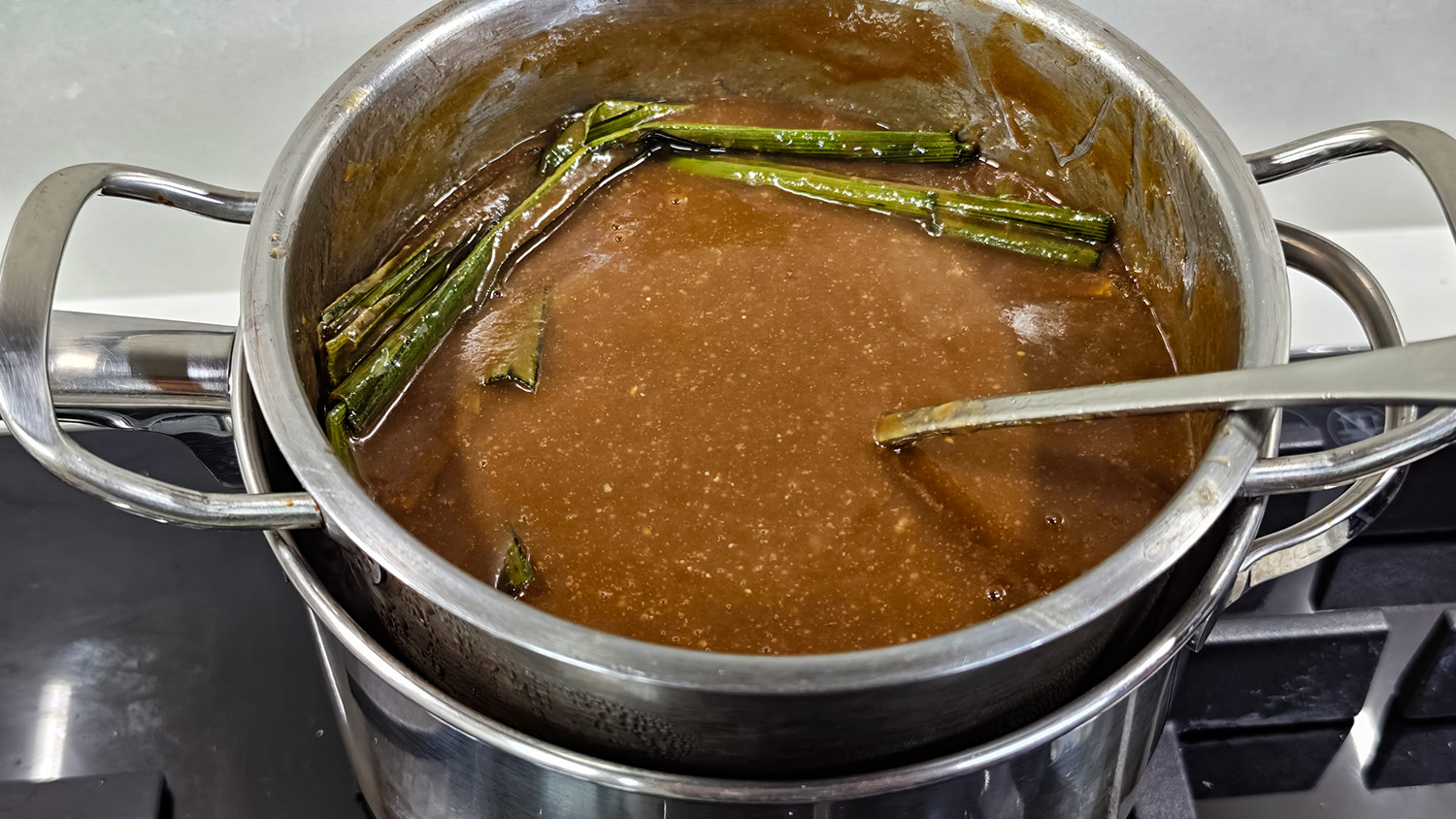
The cream, egg and sugar concoction at half-way through the
cooking.
The arrangement was one smaller saucepan with the concoction,
placed in a larger saucepan with boiling water.
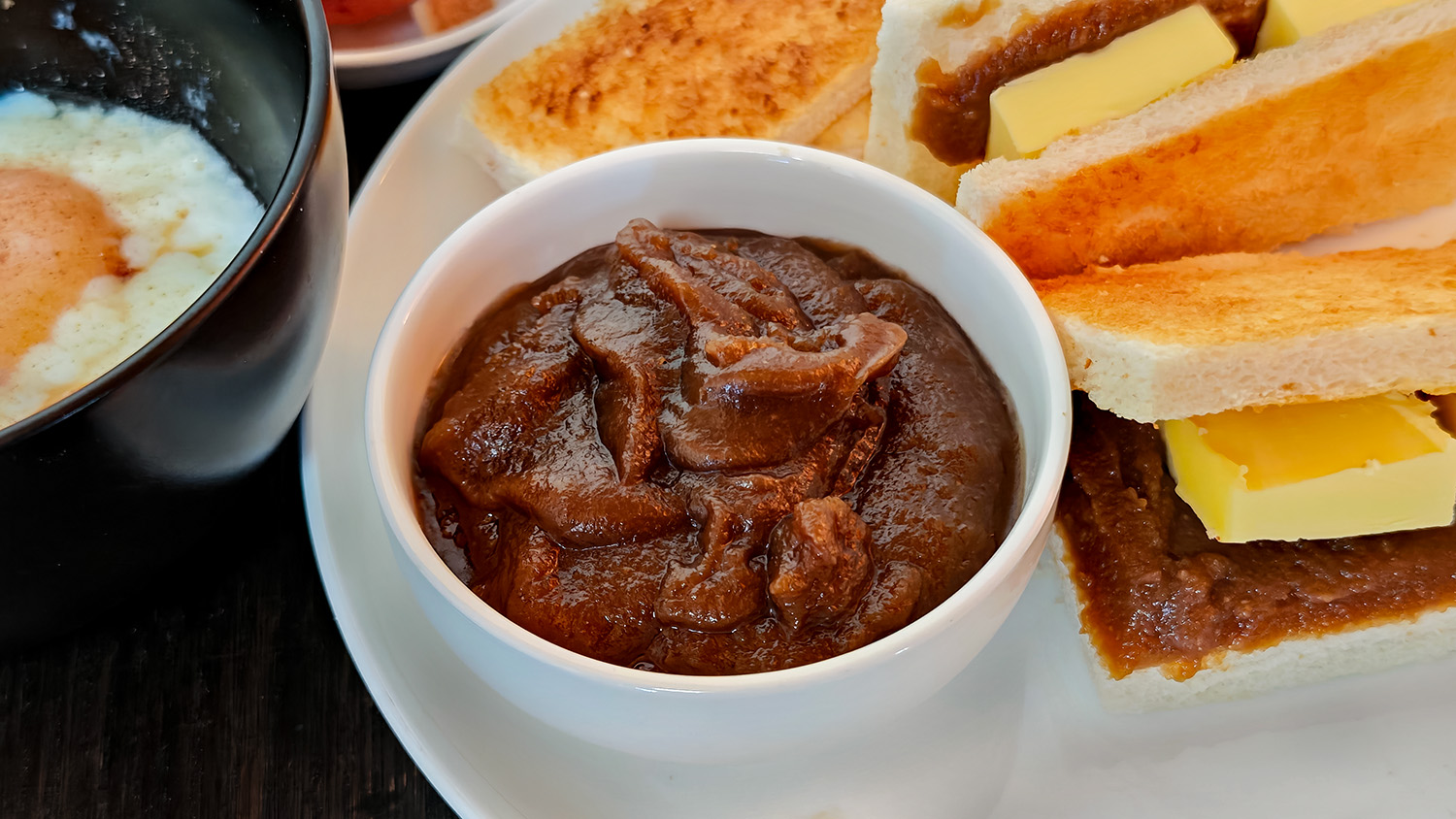
Clem's Brown Sugar Kaya
ENJOY!
12 July
2026
Created by Clem Kuek
