Clem's Blackberry Jam
Like most fruits jams, this is easy to make, depending on the amount of each fruit's natural pectin content. The higher the content, the easier it is to have the jam set to the firmness we usually associate with jams. For example, I have never had any setting problems making apricot jam using the dried fruit (see mid-article here).
The other thing to remember about making pectin-based jams is that an acid (usually lemon juice) needs to lower the pH of the jam-in-making. When the cooking fruit is lowered to a pH between 3.3 and 2.8, the negative charges of pectin are neutralized so that its molecules can bind together to form a gel.
The other vital ingredient in
a fruit jam is the quantity of added sugar. We think of jams as
sweet products as indeed they are. Together with a lowered pH,
the amount of sugar in a jam act in concert as preservatives to
allow the jam to be kept microbiologically safe to consume for
lengthy periods of time.
I have had an opened bag of
blackberries (from making fruitcake) sitting in my freezer for a
long time, and today, I decided to make jam out of them. Here's
how I did it:
INGREDIENTS
- 400 g
frozen blackberries (400 g).
You can also use the fresh product if you have it.
- 200 g
Sugar.
You can opt to use less but with caution as lowering sugar content reduces the jam's shelf-life keeping quality.
- 30 mL
Lemon juice (use this as a starting point).
-
Pectin (if needed - see below).
- Water (as needed).
METHOD
-
Allow the frozen fruit to
defrost.
-
Add the lemon juice and
sugar.
-
Gently bring the fruit to the
boil over low heat initially so as not to scorch your jam in
the making. Mash the fruit as you heat so that the juices
are released. Leave some of the fruit whole if you like the
berries to be seen in the final jam product.
-
Slow boil over some 30 - 40
minutes while regularly stirring.
-
As water evaporates from the
jam and pectin gel develops, the jam should thicken.
-
Towards the end of the
boiling, take out a teaspoon of jam and let it sit on a cold
plate. If the sample solidifies to a jelly strength that is
satisfactory to you, you have finished making your jam.
-
In my case, I found the
resulting combination of sugar and pectin formed too solid a
jam. So I added some quantity of water to loosen the jam,
brought the saucepan to a boil again and then slowly added
some 20 g of Jamsetta with pectin. This is a
supermarket product closest that I could find to just pectin
alone. Apart from pectin, Jamsetta also contains fine
sugar (as a diluent and spreading agent) and powdered citric
acid (acidulant). This allowed me to adjust the softness of
my blackberry jam (through addition of water and pectin).
-
All that is left to do is to
store your jam in a bottle straight from the hot saucepan
and keeping it capped in a refrigerator between uses. It
should last weeks untouched.
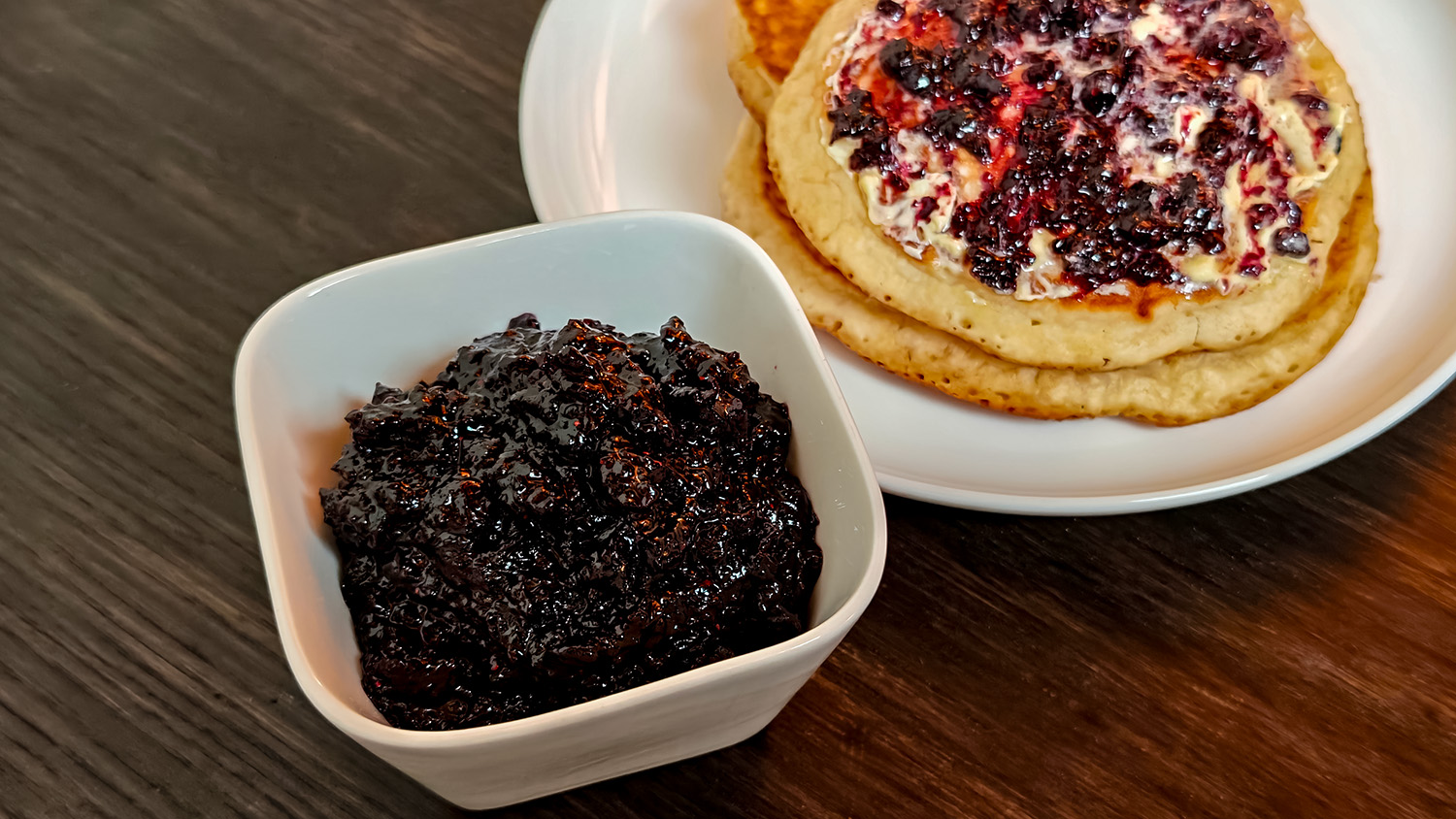
Clem's Blackberry jam
ENJOY!
10 July
2026
Created by Clem Kuek
