Clem's Egg Noodles for Kolong Mee
Kolong Mee is staple culinary food item in Kuching, Sarawak. I previously described it here:
https://clemkuek.com/photoalbum/photo791.html
Today, I wanted to try and make for my first time, the noodles for Kolong Mee. This is an egg noodle similar to many other such noodles used in Chinese dishes but apparently which does not involve the use of lye water (an alkaline water used to make food from wheat dough have a chewier texture). Regardless, many Kolong Mee connoisseurs will tell you that the noodles in this dish is springy. I think that this would be the result of the way the noodles are made and the cold water step when cooking the noodles (this causes a change in the gluten structure of the cooked noodles such that it is presumably tighter having been given a cold shock.
I describe for you, the two steps in making the noodles and dish tonight:
INGREDIENTS
Noodle making
- 500 g High
Protein Wheat flour (bread or pizza-making flour).
- 160 g
water
(this will vary with type/brand of flour but use this as a first approximation).
-
1 egg (about 50 g).
- 5 g salt.
Kolong Mee
- Fried onions.
- Fried garlic.
- MSG.
- Fish sauce.
- Vinegar.
- White Pepper.
- Lard or cooking
oil.
- Choi Sum or
Baby Bak Choy.
- Your preferred
protein:
Char Siew is de rigueur.
Fish cake.
METHOD
Noodle making
-
Add the salt to the water and
dissolve.
-
Add the egg and mix well.
-
Slowly add the liquid to the
flour (sifted) while mixing either by hand or a machine
mixer).
-
Knead until
the flour and liquid come together.
-
Stretch and fold the dough
several times and the leave it wrapped to rest (for gluten
development) for an hour.
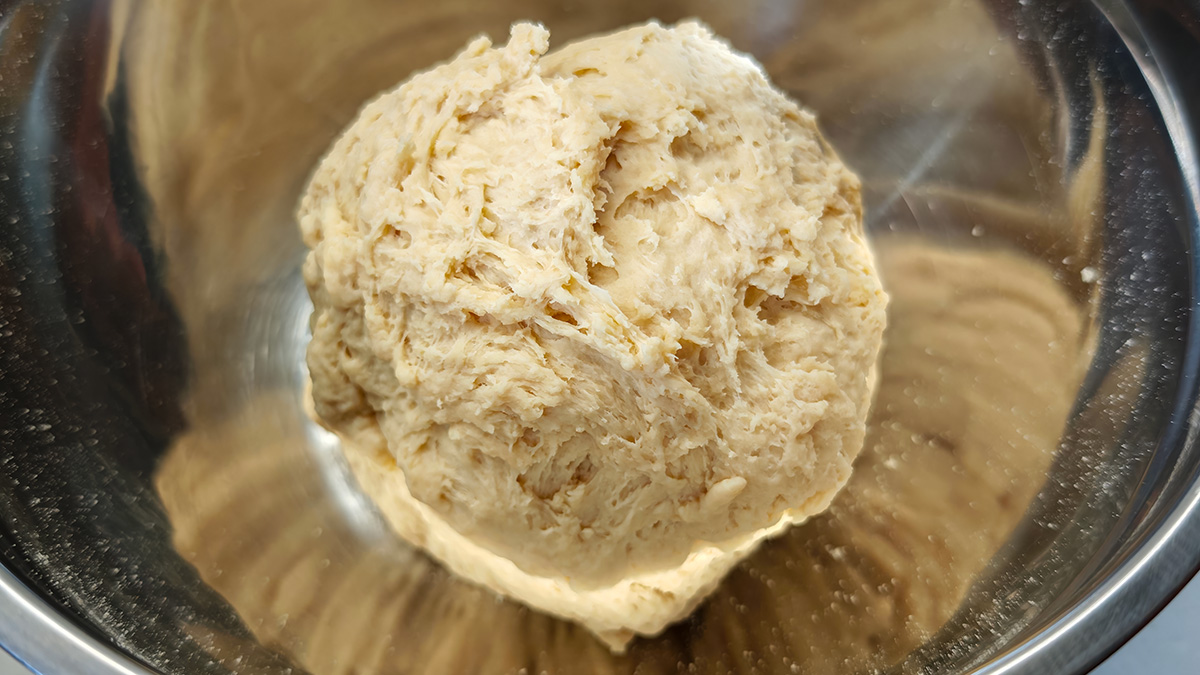
Dough ball after kneading.
Note that folding results in tears in the skin of the ball at
this stage of dough development prior to resting.
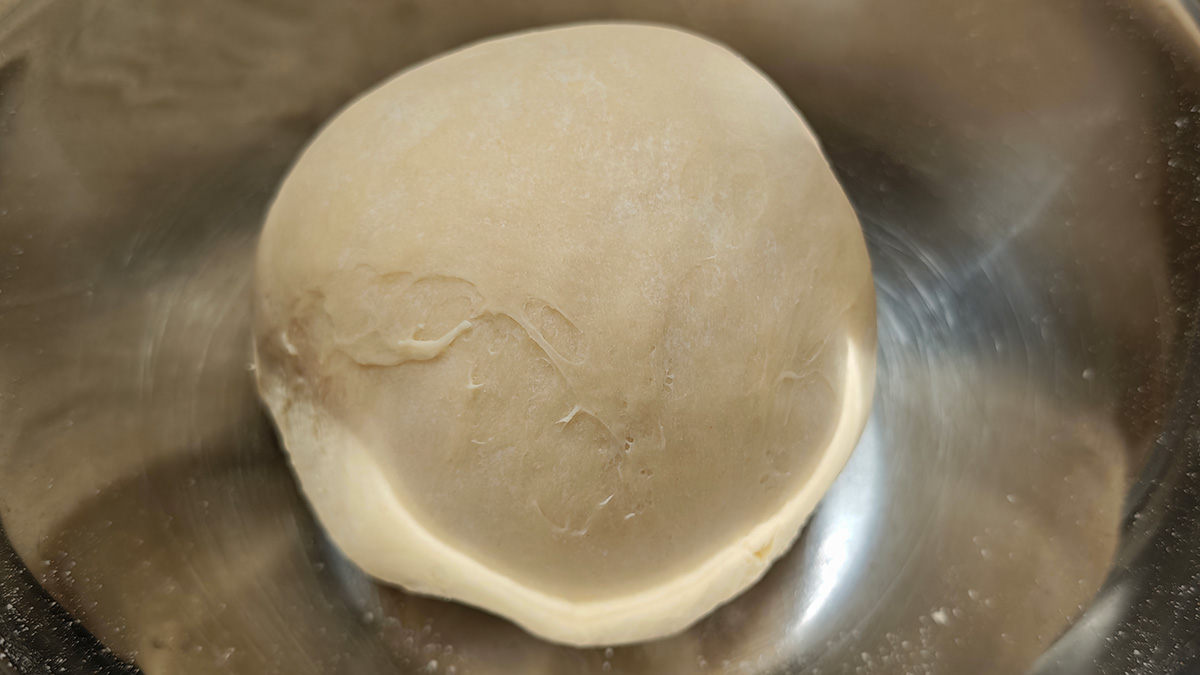
The dough ball after
resting and stretching/folding.
Note the smooth skin after dough resting and gluten development.
-
After resting the
dough, stretch and fold it several times.
If the dough is too stiff to fold, leave it alone to rest for more time in blocks of 15 minutes.
-
After a final folding,
leave the dough to rest for 15 minutes after which, roll out the
dough to a thickness to your liking (according to how thick you
would like your noodles to be.
Dust the dough with flour as you work on it.
With my VEVOR Kitchenaid pasta rolling attachment, I started on Setting 8 (wide) and moved thinner in two further steps to 7 and then 6. The flattened dough was passed through each step width at least twice.
Flour dust your dough as you work it.
-
When you have rolled
out your dough to the desired thickness, it is time to cut it into
noodles.
-
Flour dust your dough
sheet and then you can either hand cut it into flat noodles, or pass
the sheet through a noodle attachment on a machine as I did.
As the noodles are formed, continue dusting the cut dough with flour to keep the strands separate and also make them drier if the dough is still a bit moist.
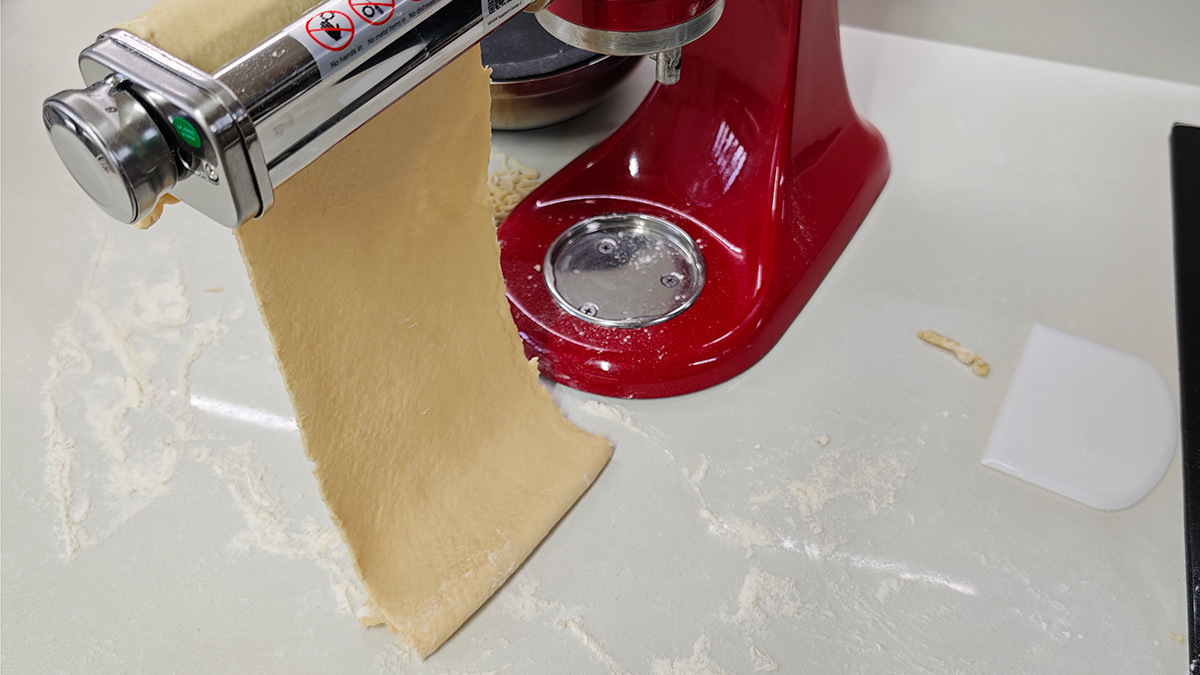
The dough being rolled flat
through several passes.
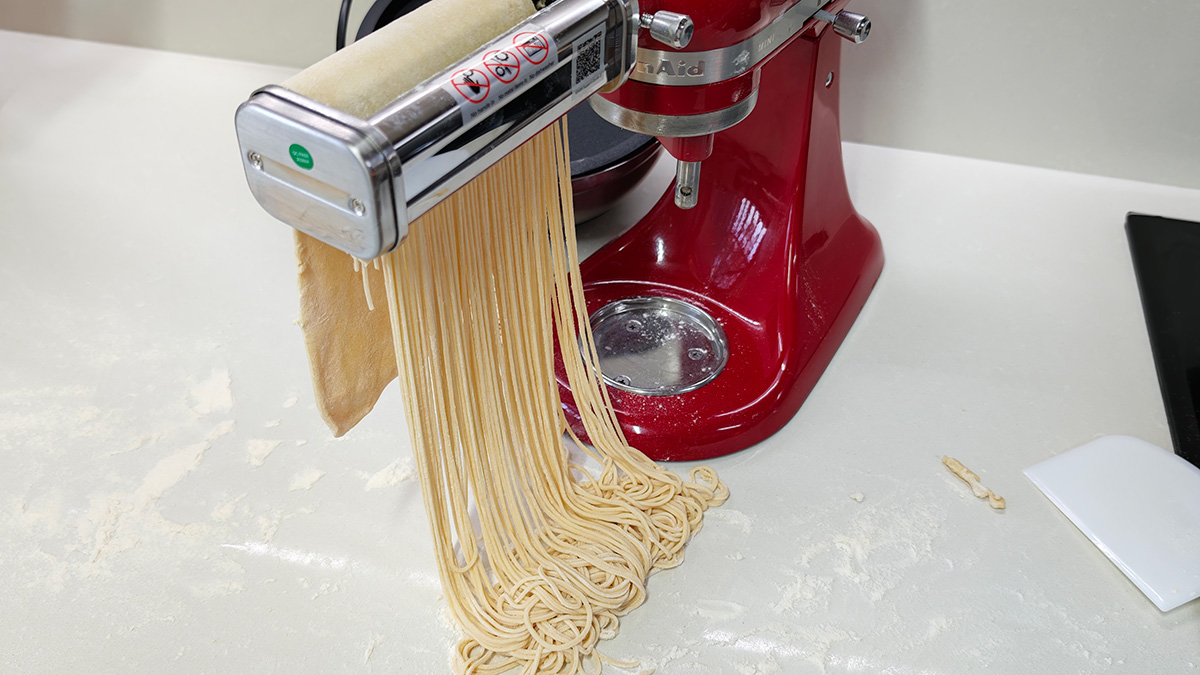
Flattened dough being
cut into noodles.
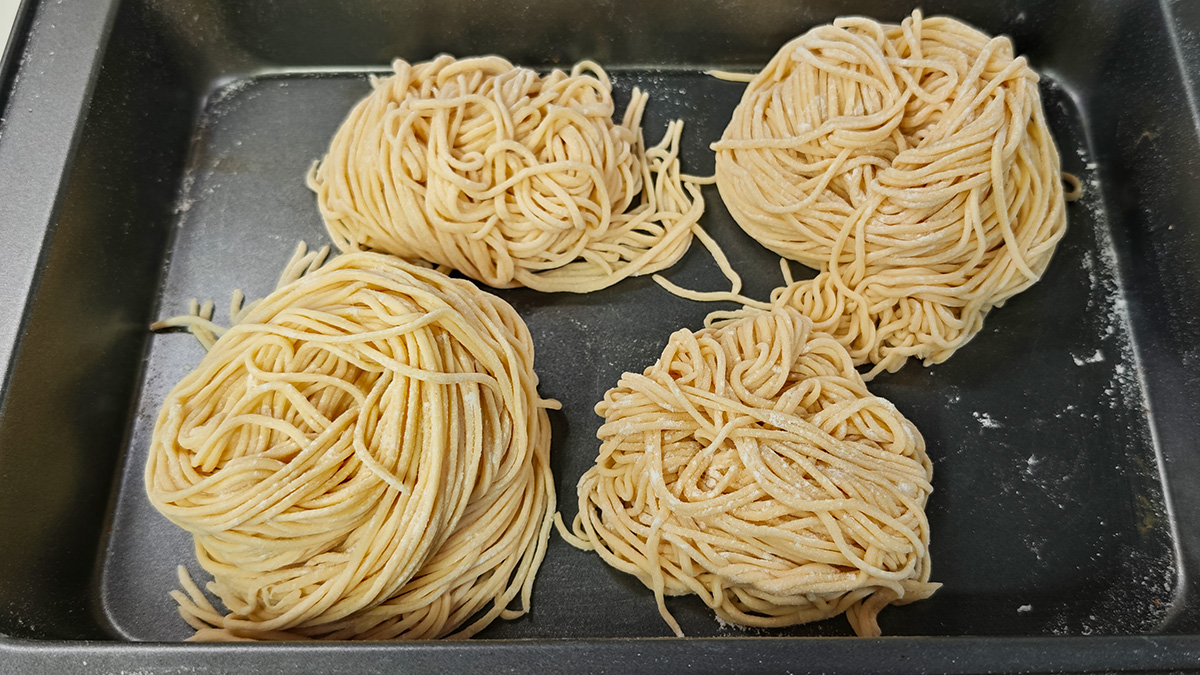
Noodles cut using the VEVOR
Noodle Cutter attachment from dough sheets made at Setting 6 on
the VEVOR pasta rolling attachment
- The noodles as prepared are now ready for use, or you may want to let them stand around for awhile to dry out a bit more for a "stiffer" noodle.
METHOD
Kolong Mee
-
In a large saucepan, boil up
plenty of water.
This will be used for cooking the noodles and prior to that, blanching the vegetables.
-
Make the dressing for the
Kolong Mee:
To a serving bowl add lard, MSG, fish sauce, sprinklings of fried onions and fried garlic, and vinegar (relative proportions as you prefer).
Mix well.
-
Cut your protein to preferred
sizes.
Set aside for dish assembly.
-
Blanch your preferred
vegetables in the boiling water.
Do not over cook.
Set aside for dish assembly.
-
Pick up a serving portion
sized handful of noodles and toss them into rolling boiling
water.
Cook only for as long as they become cooked (al dente).
Do not over cook as the next step will not work well.
-
Remove the noodles from the
boil and immediately plunge them into a large amount to cold
water to cause the noodles to cold shock.
-
Remove from the cold water
and return to the boiling water to warm them up to serving
temperature.
-
Using a cooking spider or
something similar, flick the noodles to fully drain the
noodles of adherent cooking water.
"Drier" noodles will mix better with the oil dressing in the next step.
-
Now deposit the warmed up
noodles into the serving bowl containing the dressing and
toss to mix well.
-
Do final assembly by
arranging the vegetable and protein.
Sprinkle with fried onions/garlic and dust with White Pepper.
- You should end up with this:
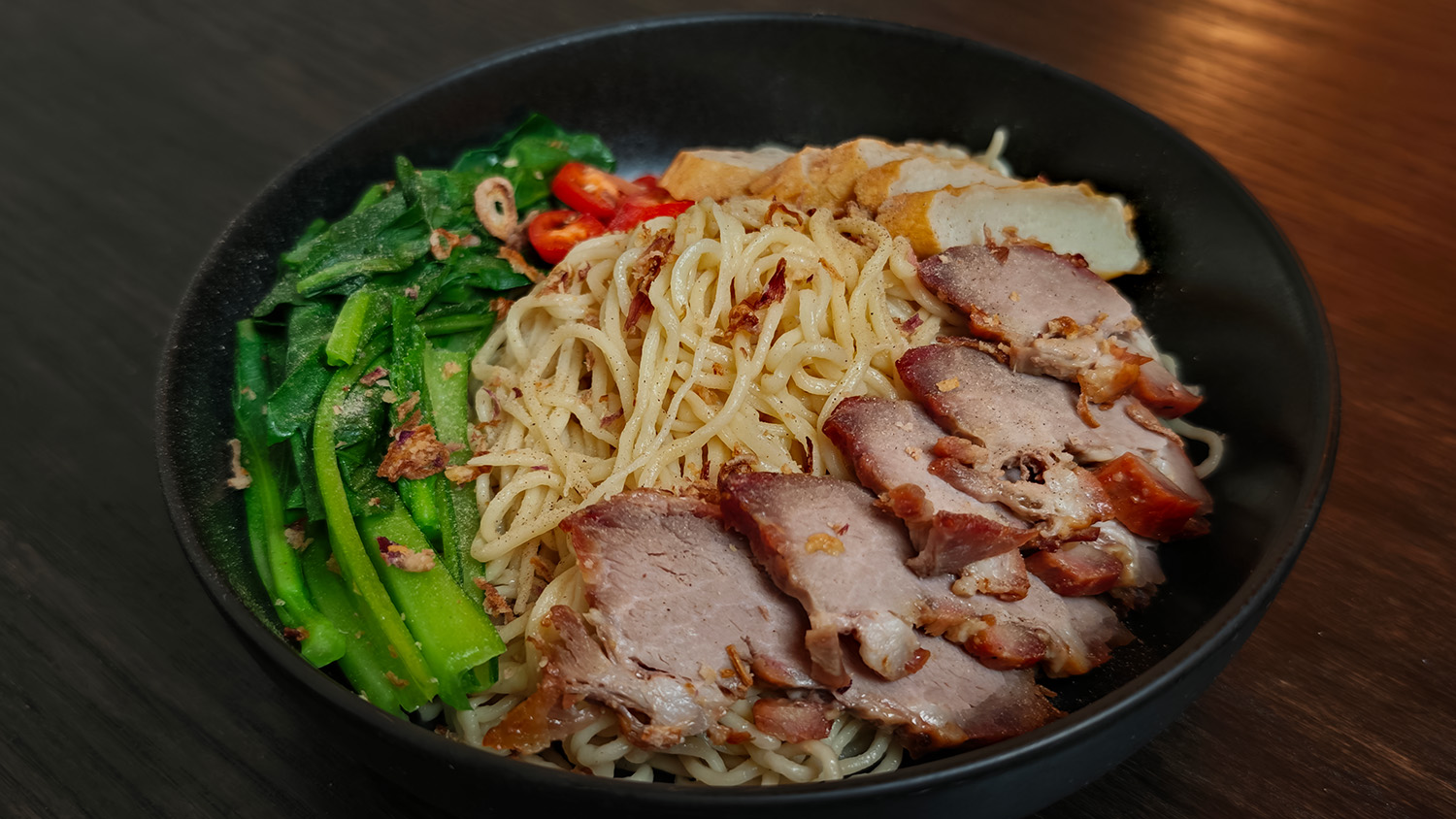
Clem's Kolong Mee made from
scratch.
ENJOY!
02 July
2026
Created by Clem Kuek
