Clem's Beef Shank Nihari
It is a mystery to me as to why despite living in Islamabad for some 3 months in the northern winter of 2006/2007, I managed to miss having what is considered Pakistan's national dish viz. nihari.
Nihari is regularly cooked with lamb or mutton as the main ingredient although beef is also used (you can also cook it with chicken if so desired). It used to be a dish eaten with naan for breakfast. The tough cuts of meat is used; slow stewed and the gravy then thickened. It is a dish of many spices just like the briyani. To save on some steps, nihari powder (masala) can be used. I decided to make good my culinary omission today by cooking beef shank nihari for dinner. Here's how you can do it too:
INGREDIENTS
- Around 1
kg of beef shank.
I used osso buco which in Australia (and probably most other places) is transverse cut cow shins.
Shin has connective tissue which when slow stewed turns gelatinous and this contributes to the characteristic of a nihari.
Further, by using osso buco I obviated the need to buy the other essential ingredient for this dish: Marrow bone - because at the centre of each osso buco cut is a piece of shin bone with marrow. The bone marrow contributes gelatine and fats to the dish to give it a luxurious mouth feel.
-
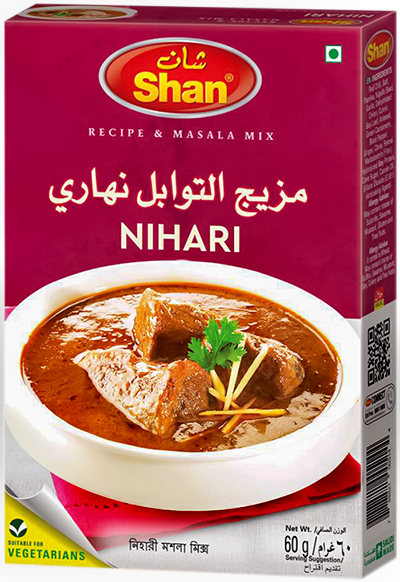
60 g Shan Nihari masala.
Note: This powder contains salt and so taste as you cook in order not to over salt. It is also VERY spicy hot.
- ALTERNATIVE:
Make your own nihari powder (recipe as per Rabia Farooq)-Whole Spices (To be dry-roasted and ground)
- 2 tbsp coriander seeds
- 1 tbsp fennel seeds (saunf)
- 1 tsp caraway seeds (shah jeera/black cumin)
- 1 tsp whole black peppercorns
- 3-4 green cardamoms
- 1-2 black cardamoms
- 1-2 small cinnamon sticks
- 6-7 cloves
- 1-2 bay leaves
- 1-2 star anise
- 1-2 pieces long pepper (pipli) optional
- 3-4 cubeb pepper (kebab chini) optional
- ¼ whole nutmeg, grated
- 1-2 pieces mace (javitri)
and add these powders
- 2 tbsp Kashmiri red chili powder (for color)
- 1 tbsp standard red chili powder (adjust to taste)
- 1 tsp dried ginger powder (sonth)
-
¾ tsp
turmeric powder
- A tablespoon of
crushed ginger.
- A tablespoon
of minced garlic.
- Additional spices
if using Shan nihari powder:
- 1 teaspoon nutmeg powder.
- 1 teaspoon mace powder.
-
1 piece of Long Pepper (pipil).
- 2 Tablespoons of thick yoghurt.
METHOD
-
Cut the meat
into large chunks (off the bone if using osso buco).
-
In some ghee
or cooking oil, heavily brown the meat pieces.
-
Add the
crushed ginger and minced garlic and fry some more.
-
Take 3/4 of
the nihari powder and make it into a thick paste with
some water.
The add this paste to the fry.
The remaining 1/4 is used to make the topping oil later.
-
At this stage you may also
add the additional spices: nutmeg, mace and Long Pepper.
Fry for several minutes.
-
Now add enough water to cover
the meat.
-
Simmer cook for some 3 - 6 h
depending on how tender you would like the meat and how
developed a taste in the nihari is desired.
-
Some way through the stewing,
thinly slice one onion and fry it until golden brown in some
oil.
When browned, remove the onion from the oil and add it to the nihari.
In the remaining oil, lightly fry a paste made from the remaining 1/4 of the nihari powder. Add this fried paste to the stew.
-
At the end of the stewing,
make up a thick slurry of wheat flour and water.
Slowly add this to the stew and stir it in well to thicken the gravy.
How much slurry to add depends on your taste and how thick you would like your gravy.
Cook for several minutes to gelatinize the starch in the flour well (and cook the gluten).
-
Now you can add two
tablespoons of yoghurt, stir and cook it in.
-
Now you are ready to serve.
Garnish with slivers of ginger, chilli and some coriander leaves.
Traditionally had with naan.
ENJOY!
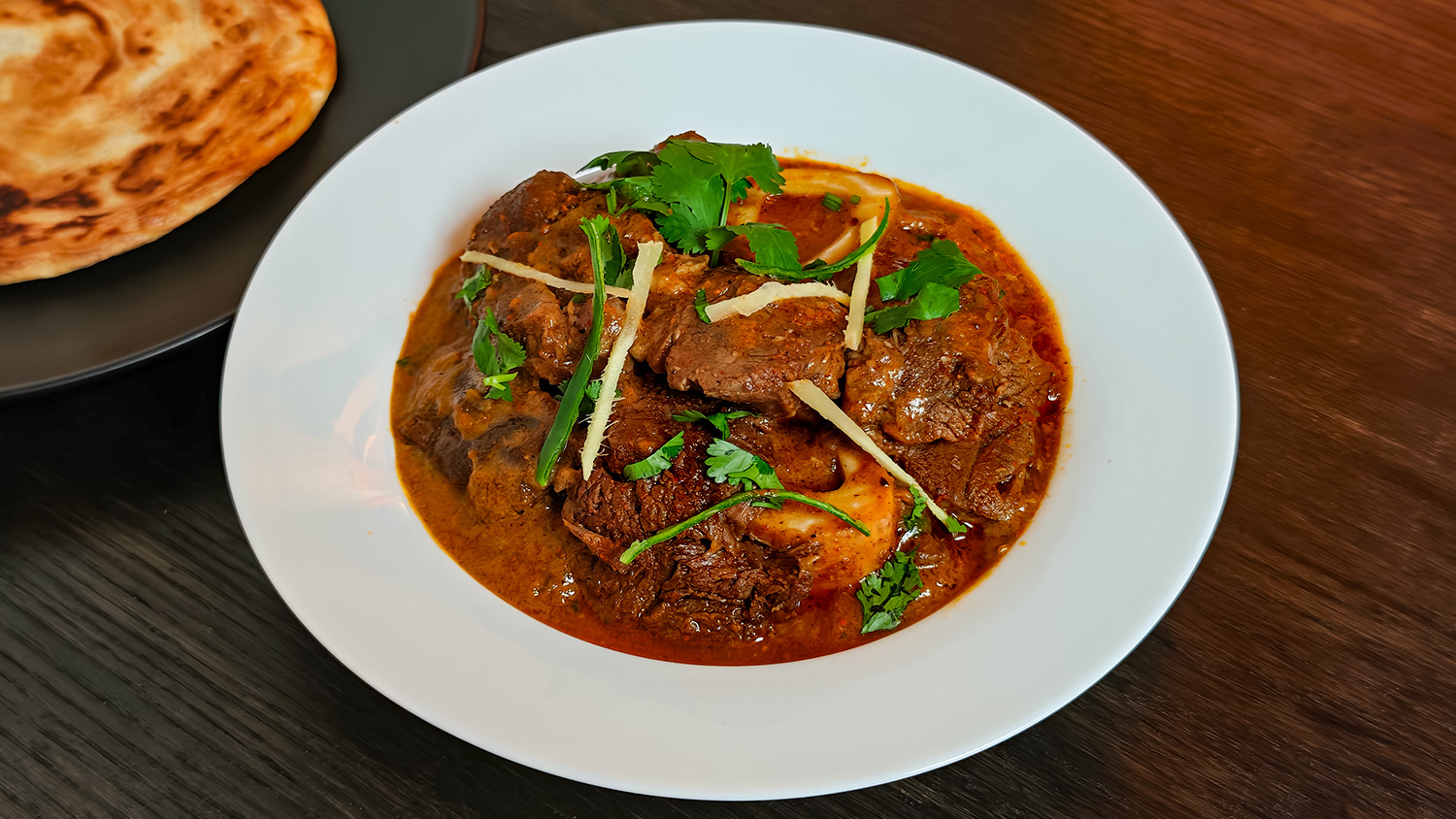
Clem's Beef Shank
Nihari
15 June
2026
Created by Clem Kuek
