Clem's Chinese New Year Mandarin Bao
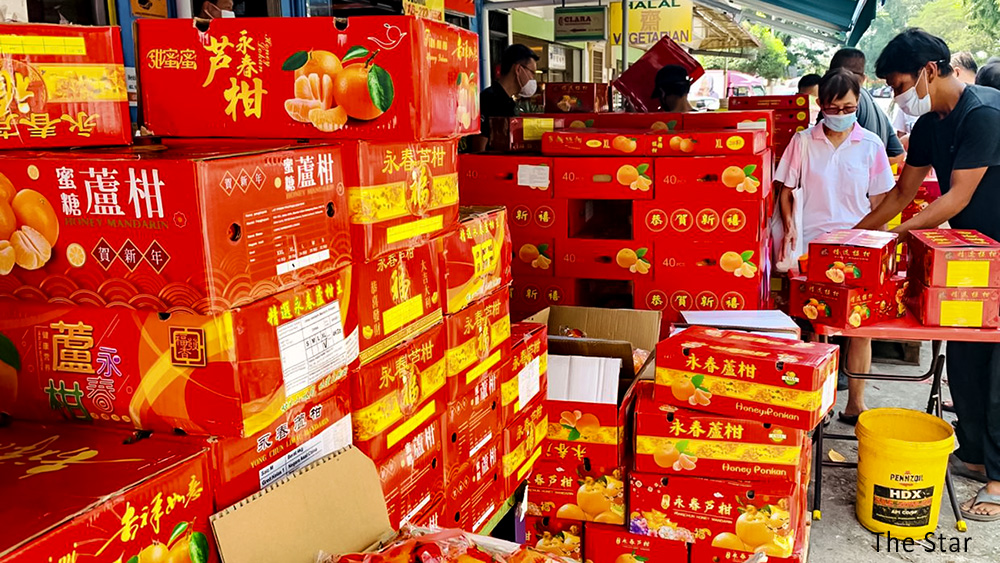
Chinese sundry shops and supermarkets in Malaysia overflow with mandarins during Chinese New Year
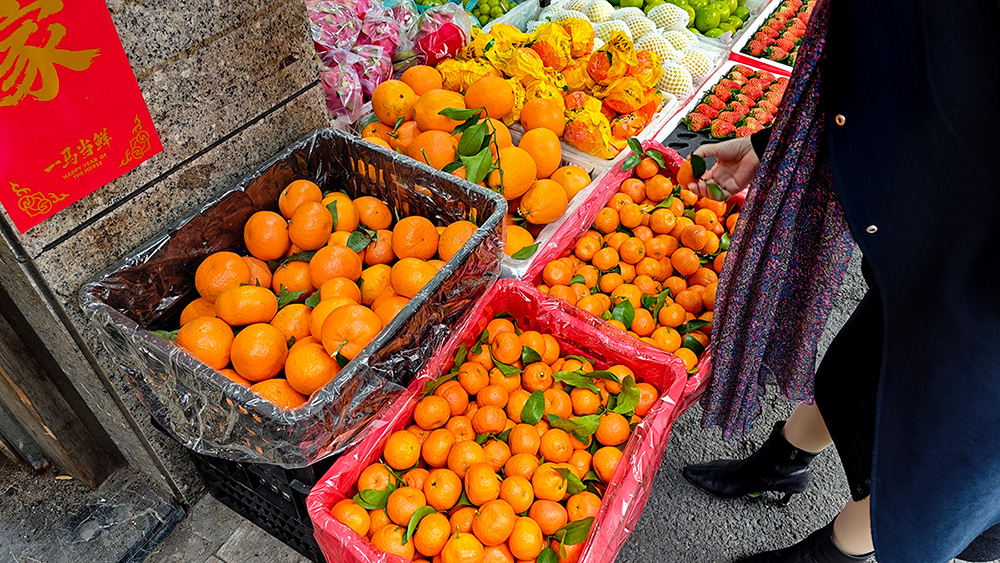
Mandarins for sale in February at Daming Food Street in Fuzhou, Fujian Province
Two years ago, I came across a recipe for making Chinese soft buns (bao) which look like mandarins. I didn't have time to make them last CNY and so this year, I made time to make them. This is the recipe.
Ingredients
Makes ten buns
-
325 g plain flour.
-
170 mL milk.
-
7 g dried yeast (you can use less but 7 g is one vacuum pack
in my case).
-
2 g baking powder (insurance backup for the yeast).
-
5 g sugar.
-
1 g salt.
-
5 g butter (softened at room temperature).
- 150 to 180 g of Red Bean paste.
Method
-
Add the milk, sugar and yeast to a mixing bowl large enough
to make the dough.
-
Slowly add the flour, salt and butter and mix to a shaggy
dough stage.
-
Ball up the dough and let it rest with the bowl covered with
a damp cloth or plastic wrap for some 15 minutes.
-
Divide the Red Bean paste into portions about 16 g each and
ball each portion up.
-
After the initial 15 minute rest, cut a 120 g portion of it
and mix some orange food colour to it and knead until evenly
distributed.
I did not have an orange food colour and so I mixed a red and a yellow to make my desired shade of orange.
-
Ball up the orange dough and let it rest for another 15
minutes under wrap.
-
The next stages involve handling dough which can be tacky.
Either keep hands wet or floured in order that the dough can
be handled easily.
-
Divide the orange dough into ten 12 g balls.
-
Divide the white dough into ten 30 g balls.
-
Form the white dough into a flat round shape about 3 inches
in diameter (enough to enclose the Red Bean paste ball).
-
Place a Red Bean paste ball in the centre of the flattened
white dough, and wrap it around.
Pinch in at the edges where the white dough meets with each other, to seal in the Red Bean paste.
-
With a rolling pin or similar, roll a piece of orange dough
into a thin round disc at least 4 inches in diameter (this
needs to cover the white dough ball containing the Red Bean
paste).
-
Place the previously formed white ball with Red Bean paste
at the centre of this orange skin and wrap it around.
Pinch in at the edges where the orange skin edges meet. You may need to stretch the skin gently to make it fit (do not over stretch as this will make the white dough be seen under the orange outer skin).
-
Place the dough ball thus made onto a piece of baking paper.
- Set aside to proof for some 15 minutes (the balls should grow in size as the yeast within ferment gas).
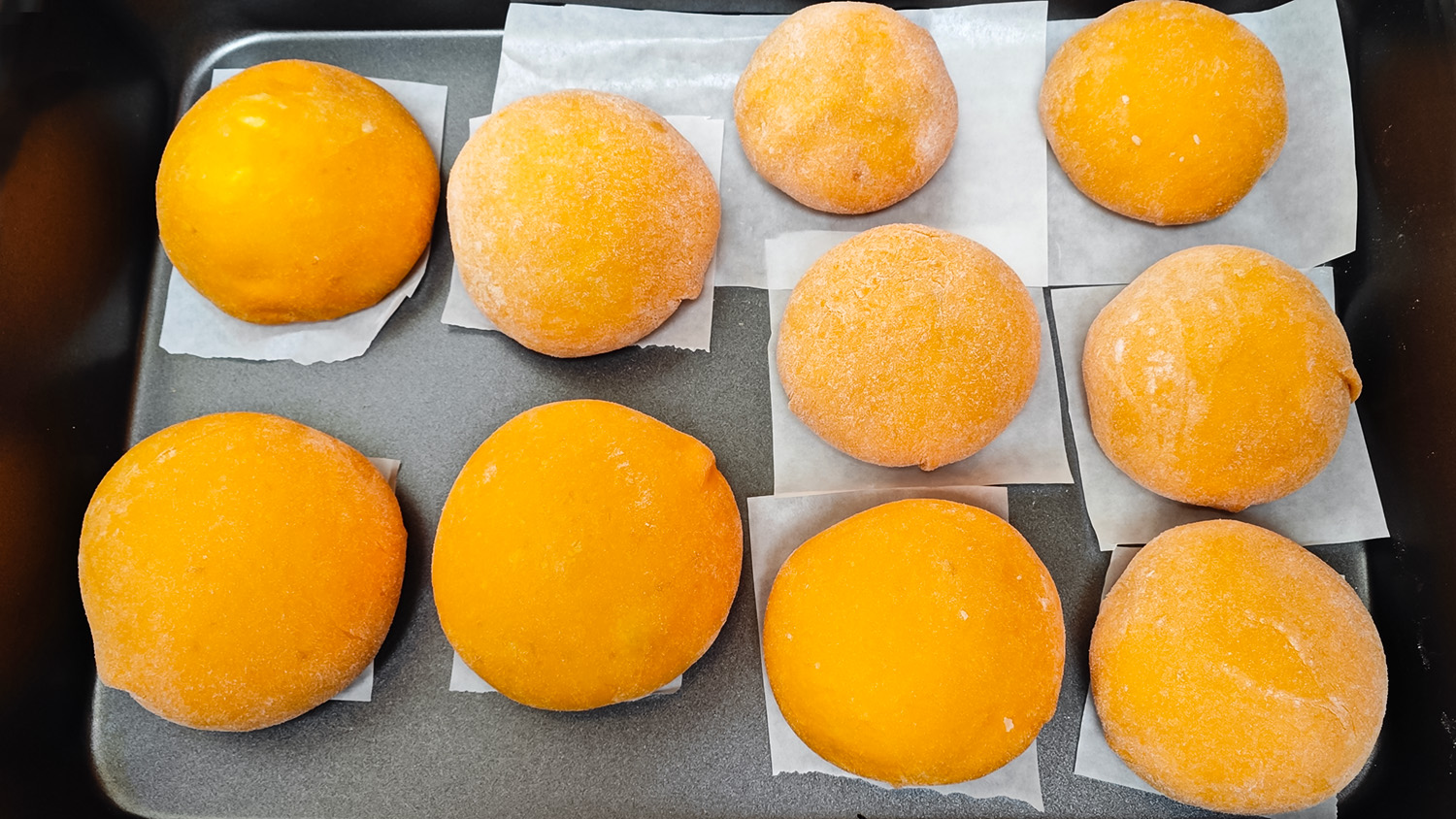
Dough balls ready for
steaming
The smaller balls have just been made while the larger ones were
made earlier in the batch and which have proofed and grown in
size.
-
Place the dough balls into a steamer already boiling away
and steam for some ten minutes.
Lower the heat to allow for the water to be just boiling and leave the lid of the steam slightly ajar if water condensation onto the buns is a problem.
- At the end of the steaming, allow the steamer to cool significantly before opening the lid in order to prevent the buns from collapsing (a sudden change in temperature will cause the air pockets in the buns to collapse).
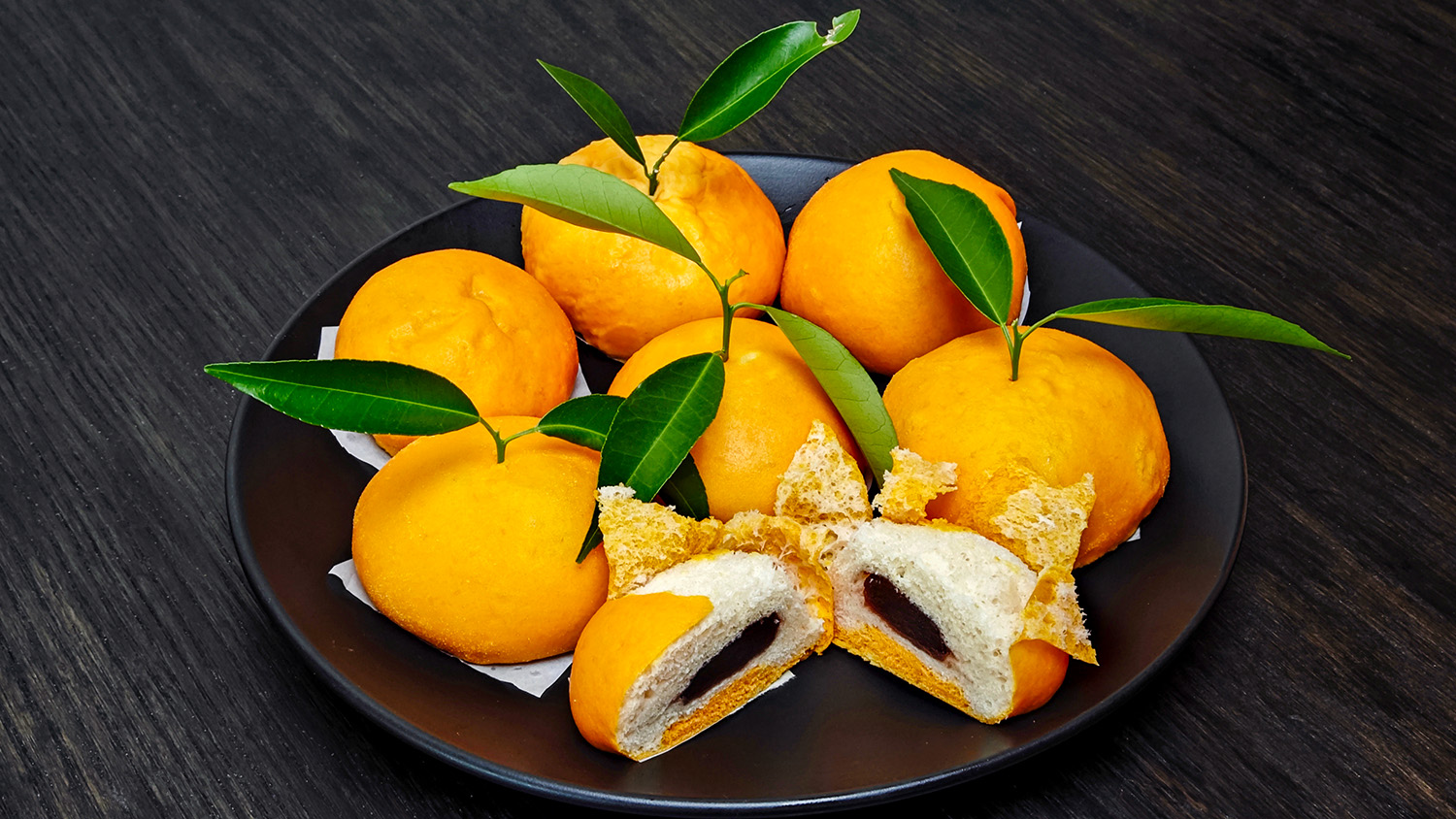
Clem's CNY Mandarin Bao
ENJOY your effort!
All my cooking (some without recipes) can be found here (click on each photo to go to that dish's page):
http://clemkuek.com/photoalbum/photo696.html
Video presentations can be found here:
10
February
2026
Created by Clem Kuek
